
A few years ago, a great track was enough.
In 2026, it isn’t.
Today, music isn’t judged only by listeners — it’s evaluated by algorithms. And algorithms don’t care about emotion directly. They care about listener behavior: skips, retention, replays, and completion rates.
Your mix and structure directly influence those signals.
Why the First 3–5 Seconds Matter More Than the Drop
Modern platforms track what happens immediately after playback starts.
What algorithms actually measure:
- Instant skips (0–5 seconds)
- Short listens (under ~15 seconds)
- Replays and saves
- Full track completion
This means the intro has more algorithmic impact than your best drop.
What this means for your mix:
- No silence at the start
- No slow fade-ins with no energy
- No DJ-style intros built for clubs
Your intro must:
- Sound finished immediately
- Have clear midrange presence
- Feel energetic even on phone speakers
💡 Algorithms don’t wait for the build-up. If the first seconds don’t connect, the track is over.
Loudness Consistency: Why Energy Stability Matters
Platforms normalize loudness — but they also observe perceived energy over time.
Tracks that feel stable and comfortable to listen to tend to:
- Keep listeners engaged longer
- Generate fewer skips
- Perform better in recommendations
Common problems:
- Weak intros compared to the rest of the track
- Overblown drops followed by energy collapse
- Large loudness swings between sections
What works in 2026:
- Consistent perceived loudness
- Controlled transients
- Energy that flows, not spikes
💡 Algorithms favor smooth listening experiences over dramatic loudness jumps.
Compression: How It Affects Recommendations
Compression is no longer just a sound-shaping tool — it influences listener behavior.
Too little control:
- Intros feel quiet
- Users turn up volume
- Next track hits too loud → skip
Too much compression:
- Listener fatigue
- Loss of detail
- Shorter listening sessions
The sweet spot:
- Controlled peaks
- Clear midrange
- Breathing dynamics
This leads to:
- Longer retention
- Fewer skips
- Better algorithmic signals
💡 The goal isn’t maximum loudness — it’s maximum listening comfort.
Playlist Mix vs. Club Mix: Two Different Goals
In 2026, understanding where your track will live matters more than ever.
Playlist mix:
- Mobile and headphones
- Strong midrange presence
- Smaller dynamic swings
- Instant clarity
Club mix:
- Large headroom
- Powerful sub-bass
- Slower energy development
- Designed for big systems
The mistake?
Trying to serve both with one mix.
Algorithms prioritize playlist behavior, not club impact.
💡 Club energy matters on the dancefloor. Playlist performance determines reach.
What to Take Away for 2026
Algorithms don’t rate “good mixes.”
They rate listener reactions to mixes.
That means:
- Intros are critical
- Loudness consistency beats peak loudness
- Clarity beats complexity
- Flow beats shock value
If you want your music to spread organically, you must mix not only for ears — but for behavior patterns.
Final Thought
In 2026, mixing is no longer purely technical.
It’s strategic.
Your mix influences whether a listener stays, skips, or returns — and that decision determines whether algorithms amplify your track or bury it.
Mix for the world that exists — not the one that used to.

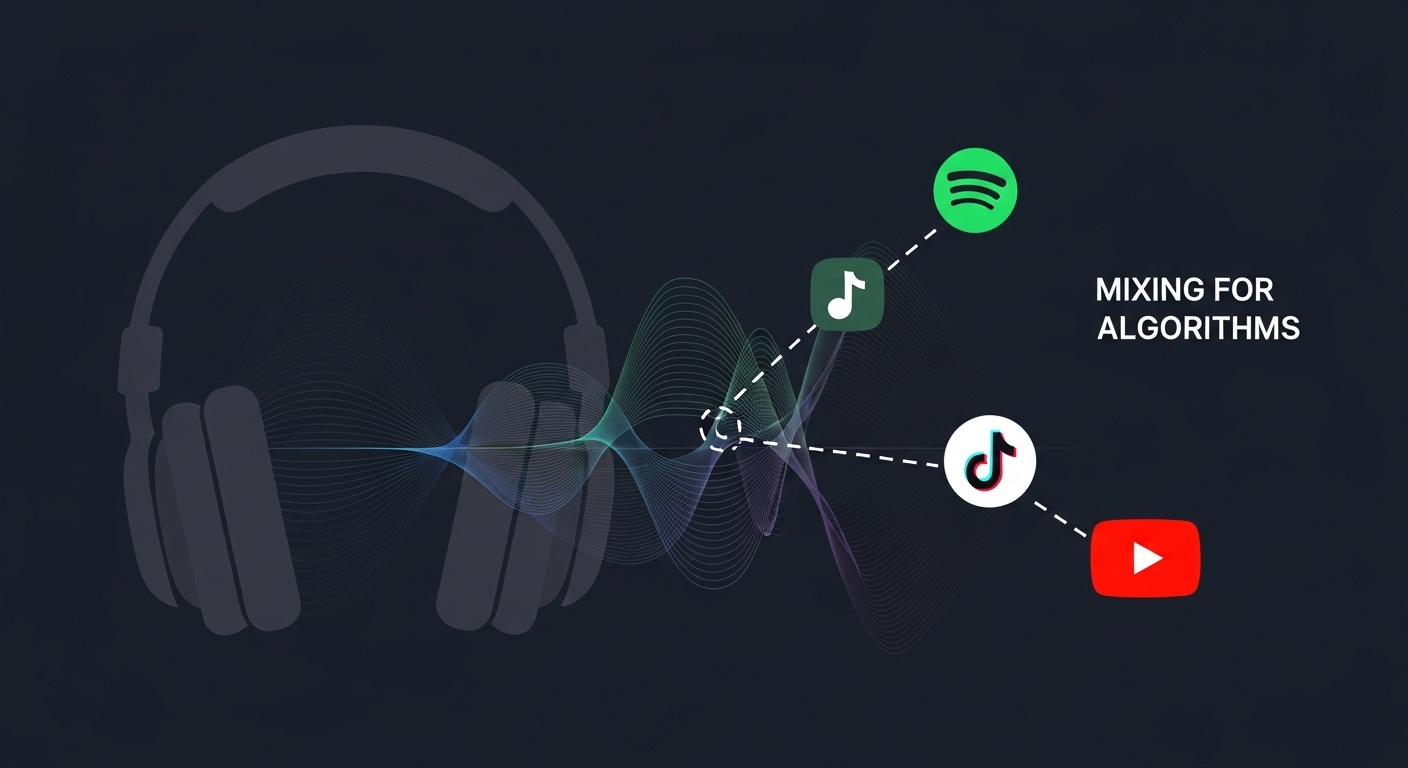
How Spotify, TikTok & YouTube Actually Hear Your Track in 2026